
One platform. The entire detection-and-response cycle.
Sigma detection, investigation, response and endpoint health in one environment. Keep the context from the first signal to the analyst’s decision.
One owned source. One connected operation.
The agent sends telemetry to the platform. Events live in a tenant-specific index; cases, observables and audit records retain operational context.
Endpoint collection
A native agent for Windows, Linux and macOS. Events, inventory and metrics with durable delivery and authenticated identity.
Detection and context
ECS events in OpenSearch, Sigma rules and correlation. Cases and observables are stored in Postgres, separated by tenant.
Decision and response
Analysts investigate signals, organize response in playbooks and track actions and approvals in the audit trail.
One agent for security and asset health.
The Sigmaward Agent collects the telemetry behind SOC and NOC operations. Available collectors vary by operating system; fleet monitoring tracks availability and agent resource use.
- ECS-normalized telemetry
- Local buffering for connection failures
- Cryptographically verified updates
| System | Collection examples |
|---|---|
| Windows | Windows Event Log, Sysmon/PowerShell when available, processes, file integrity and inventory. |
| Linux | journald, process execution through tracefs, file integrity, inventory and host metrics. |
| macOS | Unified Log, processes, file integrity and native CPU, memory, disk and network metrics. |
Collection depends on configuration, permissions and the capabilities available on each operating system.
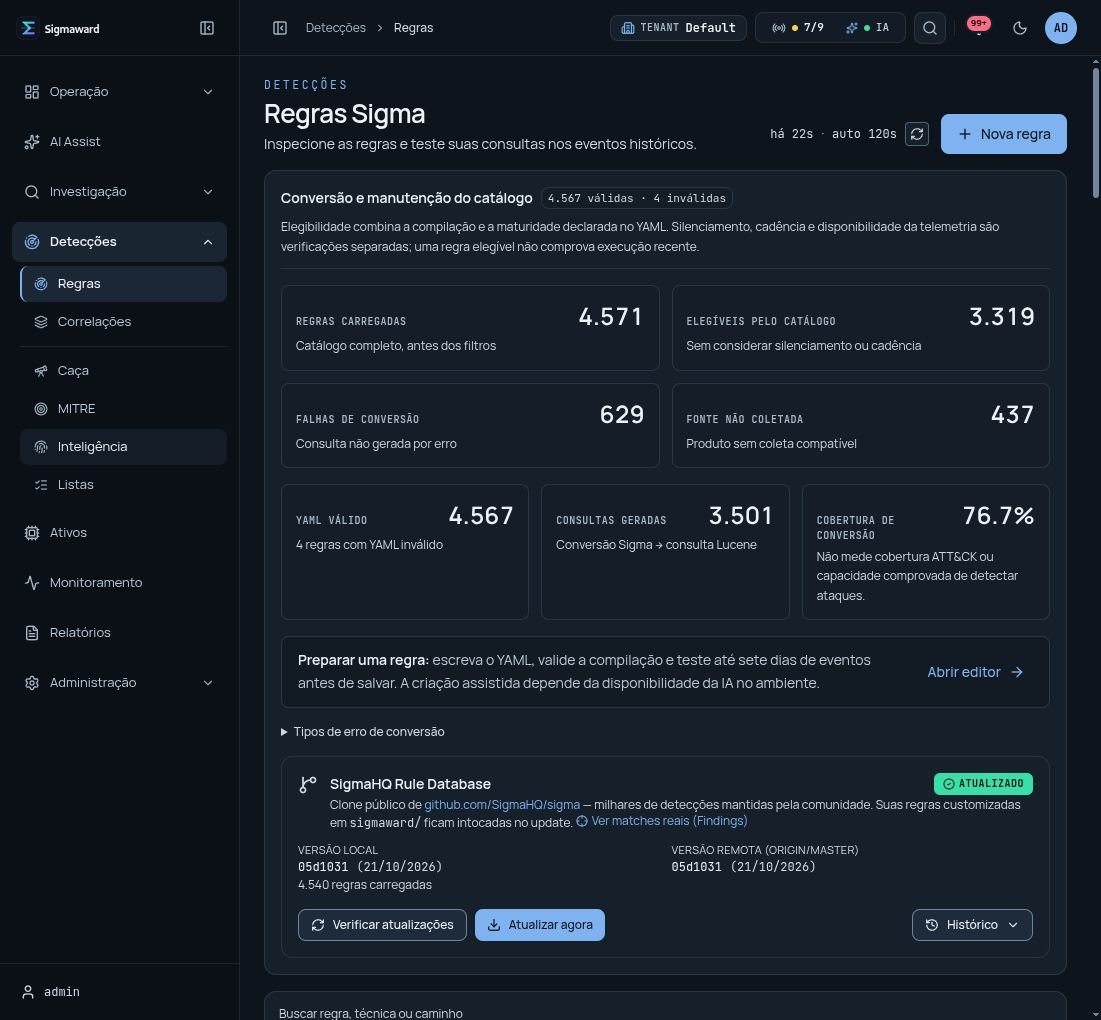
Context-driven detection.
Sigma rules, multistage correlation and behavioral analytics help prioritize signals. Entity risk connects events that might otherwise go unnoticed.
- SigmaHQ catalog and rule studio
- UEBA and Risk-Based Alerting
- Effective MITRE ATT&CK coverage
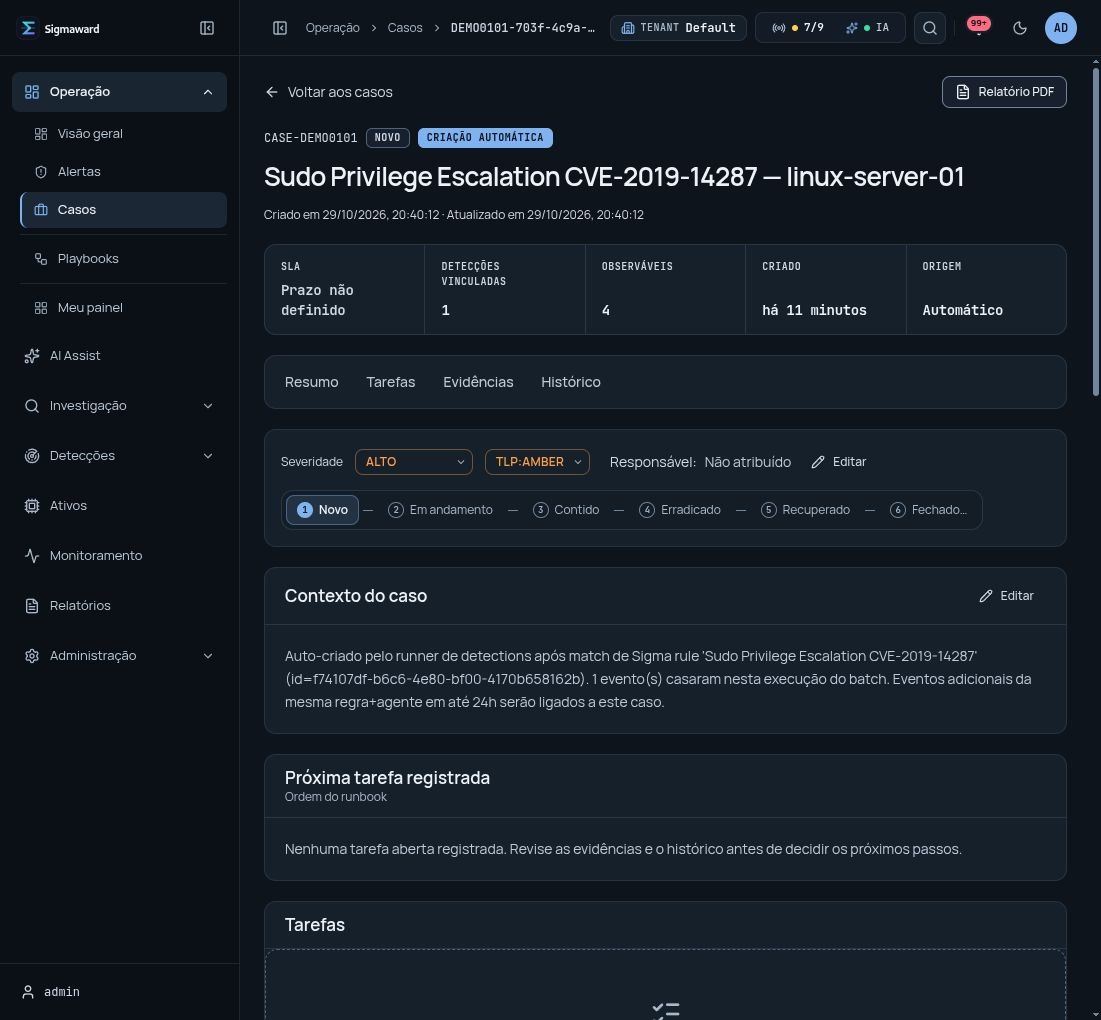
Follow the evidence. Preserve the history.
Link alerts to cases, explore relationships in the graph and organize hypothesis-driven hunting. Observables, owners and deadlines stay with the investigation.
- Cases, timelines and SLAs
- Investigation graph and threat hunting
- MISP threat intelligence and watchlists
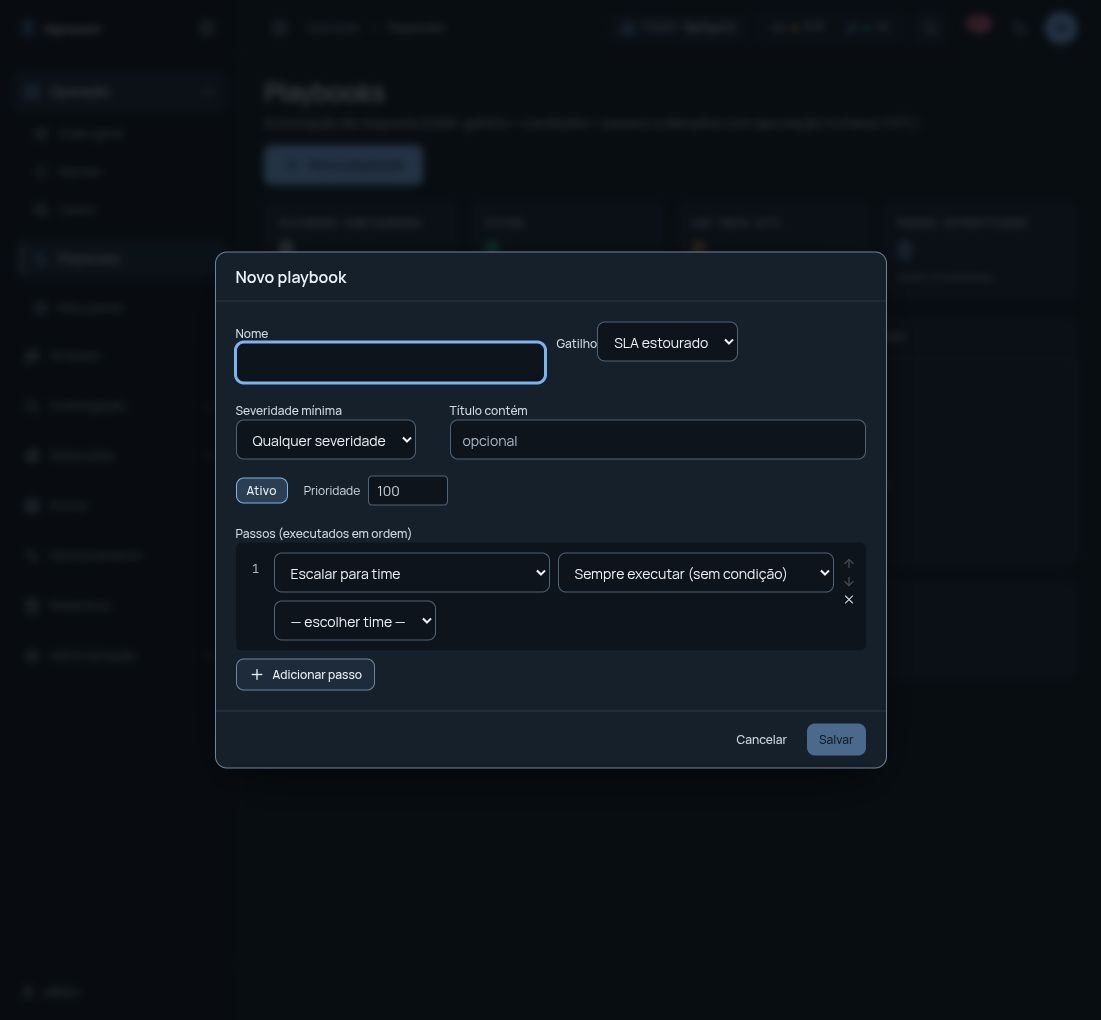
Automation with analyst control.
Organize response through triggers, conditions and ordered steps. Human approval provides control over critical actions such as host isolation and agent-based triage collection.
- Conditional playbooks and human approval
- Host isolation and process termination
- Endpoint forensic triage collection
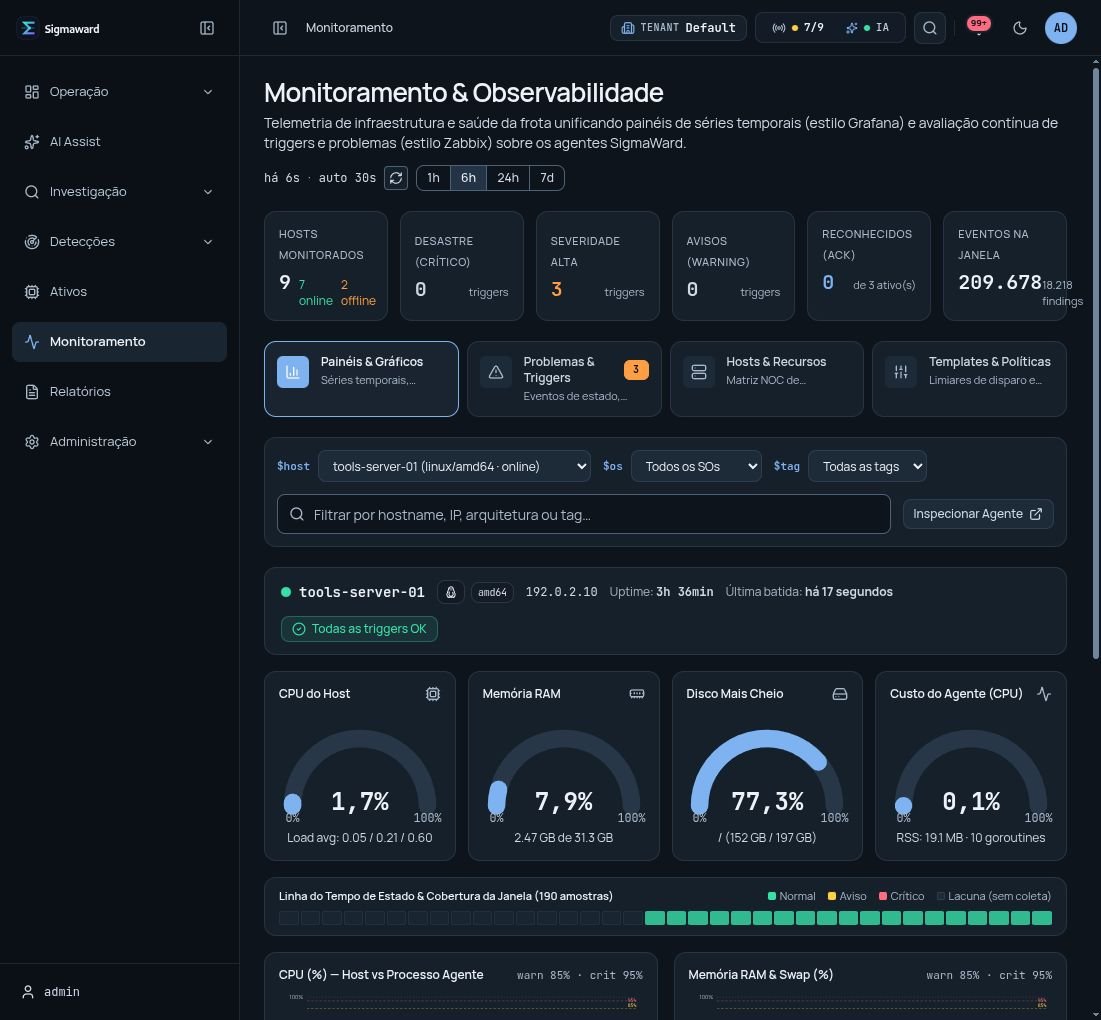
Infrastructure health. Security context.
Connect CPU, memory, disk and network metrics to alerts and cases on the same asset. Monitoring policies track problems and recovery.
- NOC monitoring integrated with the SOC
- Thresholds, sustain periods and recovery
- Personal dashboards with widgets and historical series
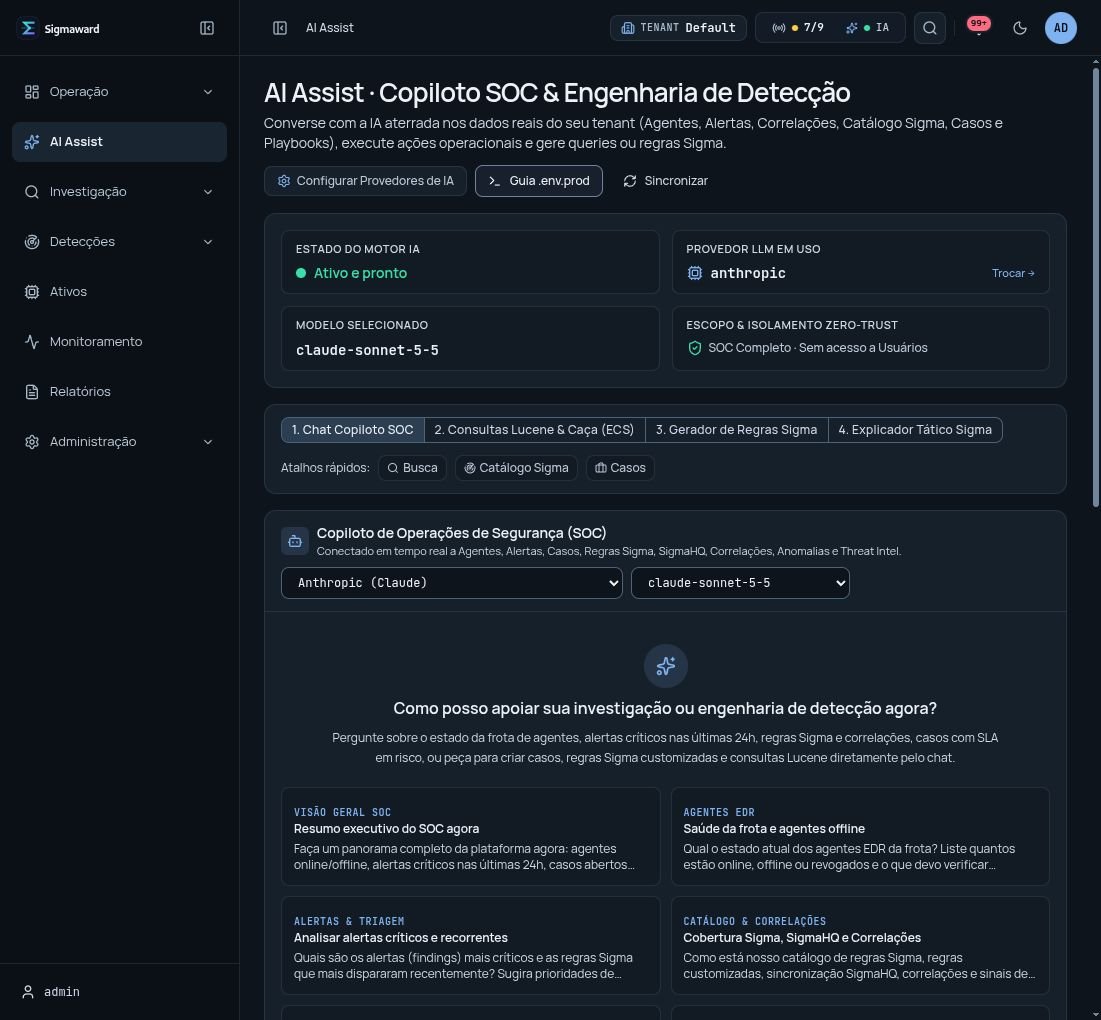
AI to support the investigation.
The copilot brings together tenant operational context and assistance for investigation and detection engineering. The interface also offers actions to create cases and rules, and to generate Lucene queries.
- Contextual chat for SOC operations
- Sigma rule creation, explanation and tuning
- Anthropic, OpenAI, Gemini and compatible APIs
Separate operations. Coordinated management.
Manage customers through an MSSP console with tenant isolation, role-based access and a verifiable audit trail.
Data per tenant
Postgres RLS and a dedicated event index per tenant separate operational data.
Identity and access
Keycloak, SSO and role-based permissions organize access. Temporary support access remains traceable.
Evidence and continuity
HMAC-chained audit records, reports and encrypted tenant backups support governance.
SSO and access controls, tenant separation and HMAC-chained auditing. Evidence to support your compliance program, not a product certification.
Integrations with clear roles.
MISP for threat intelligence, Keycloak for identity and notification channels. Telemetry comes from the native agent.
- MISP
- Keycloak
- Webhooks
- Slack
- Discord
- Microsoft Teams
Before you evaluate the platform.
Where does Sigmaward telemetry come from?
From the Sigmaward Agent installed on endpoints. MISP, AI providers and notification channels have specific roles; they are not generic log ingestion sources.
What is the role of artificial intelligence?
Support investigation and detection engineering with tenant context. The interface offers Lucene queries, Sigma rule explanation and creation, and case creation. Proposals need review before execution.
Does monitoring replace security investigation?
The two views complement each other. CPU, memory, disk and network describe operational health; alerts, cases and evidence support security investigation.
Do reports represent a certification?
No. Reports and audit trails help organize evidence for compliance programs; they do not certify the product.
Explore Sigmaward in your context.
Discuss your operation, assets and the workflows your team needs to connect.